Jacob Lawrence Was a Product of the Community Art Centers Located in
Introduction
More 75 years agone, a young artist named Jacob Lawrence set to work on an ambitious 60-console series portraying the Great Migration, the flight of over a million African Americans from the rural South to the industrial N post-obit the outbreak of Earth War I. Past Lawrence's own admission, this was a broad and circuitous field of study to tackle in paint, one never before attempted in the visual arts. Yet, Lawrence had spent the past 3 years addressing similar themes of struggle, promise, triumph, and adversity in his narrative portraits on the lives of Harriet Tubman, leader of the Underground Railroad (1940), Frederick Douglass, abolitionist (1939), and Toussaint Fifty'Ouverture, liberator of Haiti (1938).
Lawrence found a way to tell his own story through the ability and vibrancy of the painted image, weaving together 60 same-sized panels into i m ballsy argument. Earlier painting the serial, Lawrence researched the subject and wrote captions to back-trail each panel. Similar the storyboards of a motion picture, he saw the panels as 1 unit of measurement, painting all sixty simultaneously, color past color, to ensure their overall visual unity. The poetry of Lawrence'due south ballsy statement emerges from its staccato-like rhythms and repetitive symbols of movement: the train, the station, ladders, stairs, windows, and the surge of people on the movement carrying bags and luggage.
Following the example of the West African storyteller or griot, who spins tales of the past that have meaning for the present and the hereafter, Lawrence tells a story that reminds us of our shared history and at the aforementioned fourth dimension invites us to reverberate on the universal theme of struggle in the world today: "To me, migration means movement. There was conflict and struggle. But out of the struggle came a kind of power and even dazzler. 'And the migrants kept coming' is a refrain of triumph over adversity. If it rings truthful for you lot today, and then it must even so strike a chord in our American experience."
About the Artist
Filter by
-
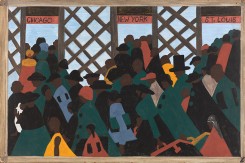
During Earth War I in that location was a great migration north by southern African Americans. -
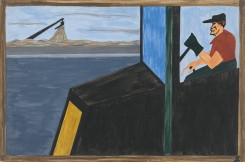
The war had caused a labor shortage in northern industry. Citizens of strange countries were returning to their native lands. -
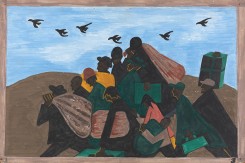
From every southern town migrants left by the hundreds to travel northward. -
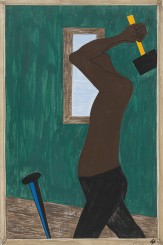
All other sources of labor having been wearied, the migrants were the last resource. -
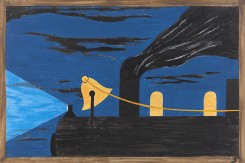
Migrants were advanced passage on the railroads, paid for by northern industry. Northern industry was to be repaid by the migrants out of their future wages. -
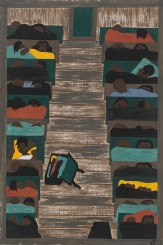
The trains were crowded with migrants. -

The migrant, whose life had been rural and nurtured past the world, was now moving to urban life dependent on industrial machinery. -

Some left because of promises of piece of work in the North. Others left because their farms had been devastated past floods. -

They left considering the boll weevil had ravaged the cotton crop. -
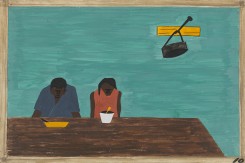
They were very poor. -
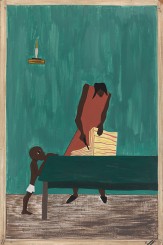
Nutrient had doubled in toll considering of the war. -
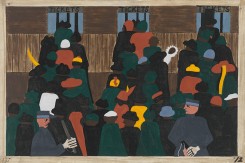
The railroad stations were at times so crowded with people leaving that special guards had to exist called to keep society. -

The crops were left to dry and rot. At that place was no one to tend them. -
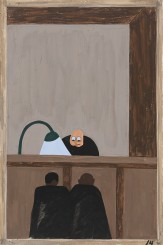
For African Americans there was no justice in southern courts. -

There were lynchings. -
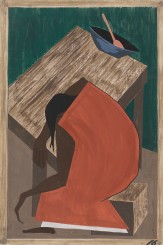
After a lynching the migration quickened. -
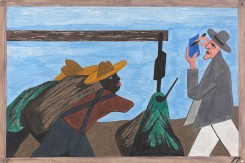
Tenant farmers received harsh treatment at the hands of planters. -
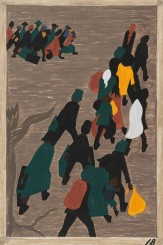
The migration gained in momentum. -
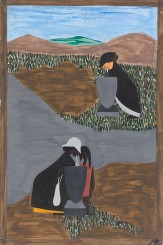
In that location had always been discrimination. -
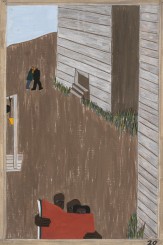
In many of the communities the blackness press was read with great interest. It encouraged the movement. -
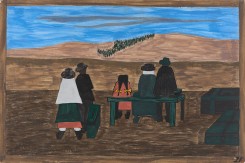
Families arrived at the station very early. They did not wish to miss their trains north. -
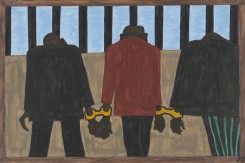
Migrants left. They did not feel safety. It was non wise to be plant on the streets tardily at nighttime. They were arrested on the slightest provocation. -
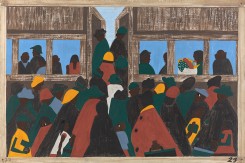
The migration spread. -
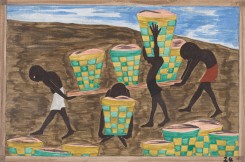
Their children were forced to work in the fields. They could not go to school. -

They left their homes. Soon some communities were left almost empty. -
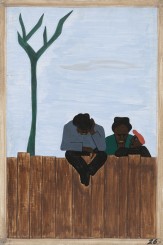
And people all over the South continued to discuss this great motility. -
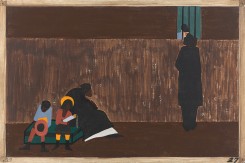
Many men stayed behind until they could take their families north with them. -
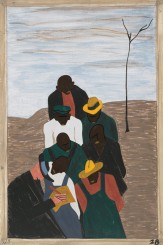
The labor agent sent south by northern industry was a familiar presence in the black communities. -
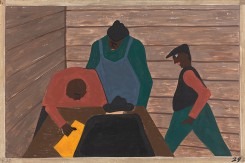
The labor amanuensis recruited unsuspecting laborers as strike breakers for northern industries. -
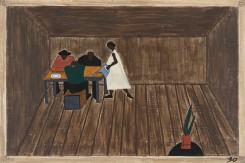
In every southern abode people met to make up one's mind whether or not to become northward. -

The migrants found improved housing when they arrived north. -
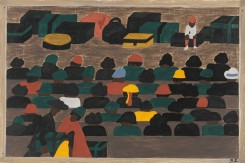
The railroad stations in the South were crowded with northbound travelers. -
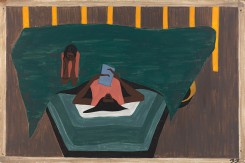
Letters from relatives in the Due north told of the amend life there. -
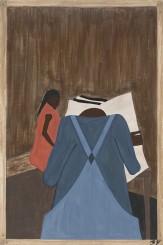
The black press urged the people to leave the due south. -
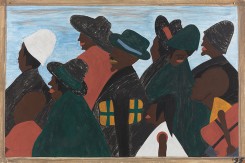
They left the Southward in great numbers. They arrived in the North in smashing numbers. -
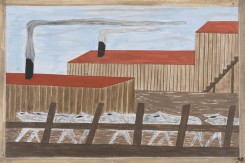
Migrants arrived in Chicago, the gateway to the West. -
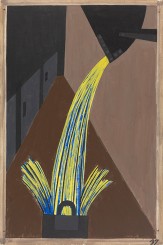
Many migrants found piece of work in the steel manufacture. -
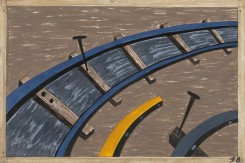
They also worked on the railroads. -

Railroad platforms were piled high with luggage. -
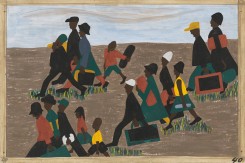
The migrants arrived in great numbers. -
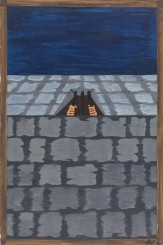
The South was desperate to continue its inexpensive labor. Northern labor agents were jailed or forced to operate in secrecy. -
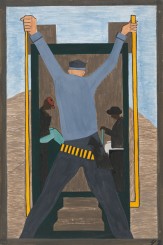
To make it hard for the migrants to leave, they were arrested en masse. They often missed their trains. -
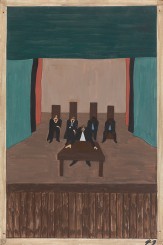
In a few sections of the South leaders of both blackness and white communities met to discuss ways of making the Southward a skillful place to live. -

Simply living conditions were meliorate in the N. -
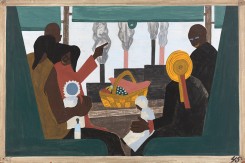
The migrants arrived in Pittsburgh, i of the great industrial centers of the North. -

Industries boarded their workers in unhealthy quarters. Labor camps were numerous. -
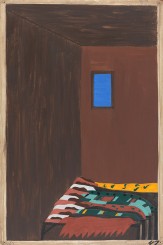
As the migrant population grew, good housing became deficient. Workers were forced to alive in overcrowded and battered tenement houses. -
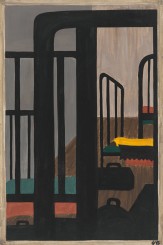
Housing was a serious problem. -
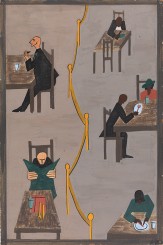
They found bigotry in the North. Information technology was a different kind. -
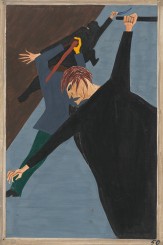
Race riots were numerous. White workers were hostile toward the migrant who had been hired to break strikes. -

African Americans seeking to find better housing attempted to move into new areas. This resulted in the bombing of their new homes. -
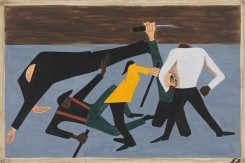
One of the virtually violent race riots occured in East St. Louis. -
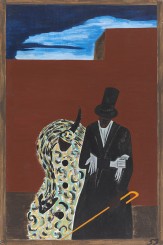
African Americans, long-time residents of northern cities, met the migrants with aloofness and disdain. -
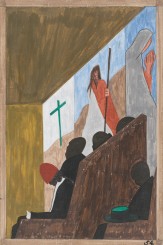
For migrants, the church was the heart of life. -
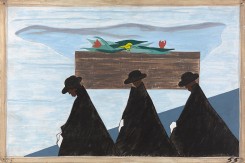
The migrants, having moved of a sudden into a crowded and unhealthy environs, soon contracted tuberculosis. The decease charge per unit rose. -
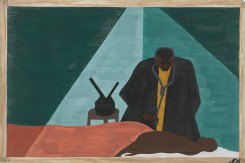
The African American professionals were forced to follow their clients in order to make a living. -
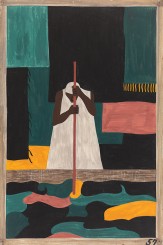
The female person workers were the final to arrive due north. -
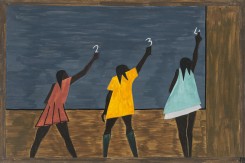
In the N the African American had more educational opportunities. -
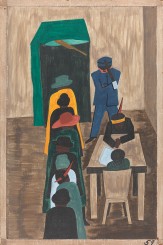
In the North they had the freedom to vote. -
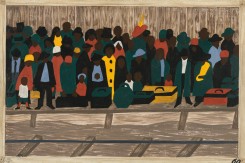
And the migrants kept coming.


Curated Responses #Console61 Your #Panel61
Source: https://lawrencemigration.phillipscollection.org/the-migration-series

Post a Comment for "Jacob Lawrence Was a Product of the Community Art Centers Located in"