Is It Legal for Minors to View Nudity for Art
When a drawing or cartoon prototype can state yous in jail
Penulis
-

Senior Lecturer in Law, Northumbria University, Newcastle
Pengungkapan
Abhilash Nair tidak bekerja, menjadi konsultan, memiliki saham, atau menerima dana dari perusahaan atau organisasi mana pun yang akan mengambil untung dari artikel ini, dan telah mengungkapkan bahwa ia tidak memiliki afiliasi selain yang telah disebut di atas.
Mitra

Northumbria Academy, Newcastle memberikan dana sebagai anggota The Conversation UK.
Lihat semua mitra
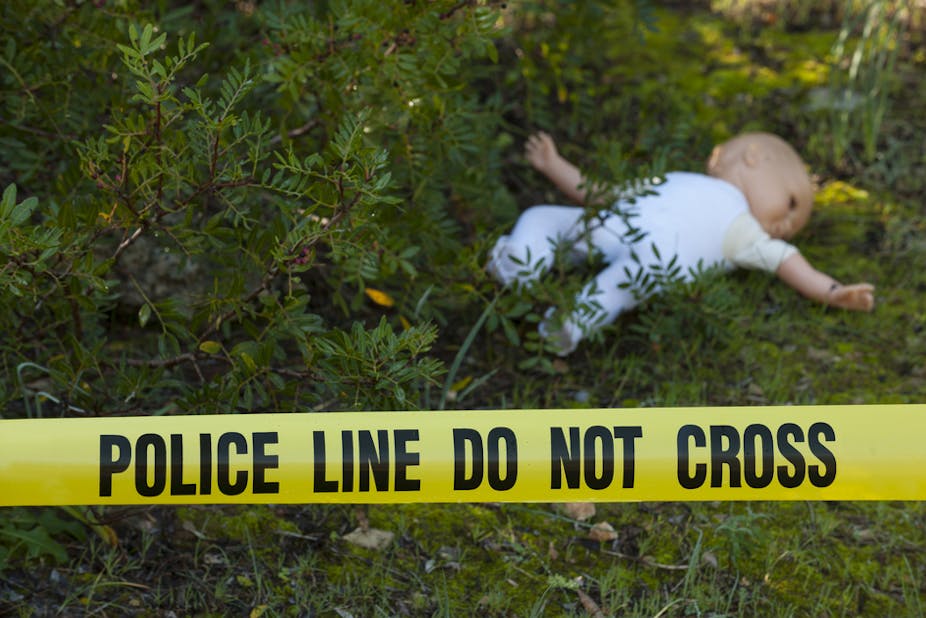
A cartoon tin can land you in court, as happened to a man recently bedevilled of possessing non-photographic images – cartoons, drawings – of a sexual nature featuring children.
Clearly child pornography, more accurately called child abuse images, represents horrendous crimes and should have no place in our society. Children are incapable of giving legal consent to sex or sexual posing for nude photographs, meaning each of such images is criminal and represents a offense scene itself.
While nobody volition disagree that they should exist banned entirely, the justification for criminalising the possession of drawn or calculator-generated images that involve no existent children is not so clear.
Under the Coroners and Justice Act 2009, sections 62-68 fabricated it a criminal offence to be in possession of "prohibited images" of children. This is defined closely to crave that the paradigm is get-go grossly offensive and obscene, and pornographic for purposes of sexual arousal. It too requires that the focus is principally on the kid's genitals and sexual regions, or includes one of diverse sexual acts either with the kid or in the presence of the child. Information technology too covers images that depict sexual activity in the presence of or betwixt children and an animate being, whether dead, alive, or imaginary.
The law covers still and moving images, and can include cartoons, drawings, and manga-way images. These images are easier to find on the net than bodily child abuse images involving existent children, largely due to the fact that virtual pornography is not illegal in all countries. For example, the existence of Japanese websites featuring fantasy kid sexual corruption has been a concern in countries where it is illegal.
The two main justifications given by the government for criminalising the possession of these "prohibited images" was that they could exist used for grooming children and could fuel child abuse by reinforcing potential abusers' inappropriate feelings towards children. Merely as the Home Office's own Consultation Paper best-selling, these justifications were not based on any conclusive scientific enquiry. In other words, the rationale of the law was to address a possible take a chance of impairment to children.
Certainly risk of damage has been regarded as sufficient elsewhere, for instance in the historic period-based restriction of adult pornography, and indeed picture show classification in full general. But the focus here has ever been on the producer and benefactor of content rather than those possessing it. Strict possession offences are intrusive and often callous in nature, and should only be used when justified by the prevention of credible harm. The problem with respect to this law governing drawing kid pornography is that information technology will in most cases be a victimless crime – the images are not of a real child suffering corruption.
Instead the law focuses on the morality and character of the prototype – that which depicts a kid, admitting an imaginary i, in an inappropriate context. The difficult question is whether this offers sufficient justification to make possessing such an paradigm a serious criminal offence when the possessor has no intent to damage a real kid (the production and distribution is a divide affair and raises more than serious problems).
Criminalising conduct is more often than not justified on the ground of preventing harm to others (after John Stuart Mill), hence why possessing real child abuse images would be a law-breaking as they represent documentary evidence of real harm acquired to children. But unless scientific evidence becomes bachelor that establishes that possessing non-photographic images leads to physical offences, this is difficult to establish. So critics contend that the real consequence – and even aim – appears to be to police thoughts and fantasies, rather than protect real children from harm. Naturally this raises bug of privacy and liberty of thought.
The The states tried enacting similar legislation almost 20 years ago through the Child Pornography Prevention Act 1996, but the relevant provisions were eventually struck down by the US Supreme Court as unconstitutional. The courtroom felt that every bit there was no harm caused to existent children, it merited First Subpoena protection. Eventually further legislation arrived in the grade of the PROTECT Human action 2003, which was much more than narrowly tailored to criminalise non-photographic pornographic images of children, merely only if they are indistinguishable from actual images of a small-scale.
Perhaps the UK should have followed a similar path and drafted more specific legislation that makes possession a criminal offence based on the resemblance and likeness of the image to a photograph of a existent child – something now possible with advances in 3D modelling and graphics software. This would take provided sufficient justification for the damage argument and, rather than creating a [strict liability possession offence](http://www.law.cornell.edu/wex/strict_liability (nevertheless the defences bachelor within the Human action), it would have encouraged prosecution simply where there is a realistic prospect of the possessor going on to cause existent harm to real children.
Pembaca kami
Jumlah pembaca The Conversation sebanyak eighteen juta pengguna setiap bulan, dan melalui Creative Commons republikasi menjangkau 42 juta pembaca.
Mau menulis?
Tulis artikel dan bergabung dengan komunitas akademisi dan peneliti yang terus tumbuh dengan lebih dari 145.000 dari 4.356 lembaga.
Daftar sekarang
Source: https://theconversation.com/when-a-drawing-or-cartoon-image-can-land-you-in-jail-33418

Post a Comment for "Is It Legal for Minors to View Nudity for Art"